 Start a Project
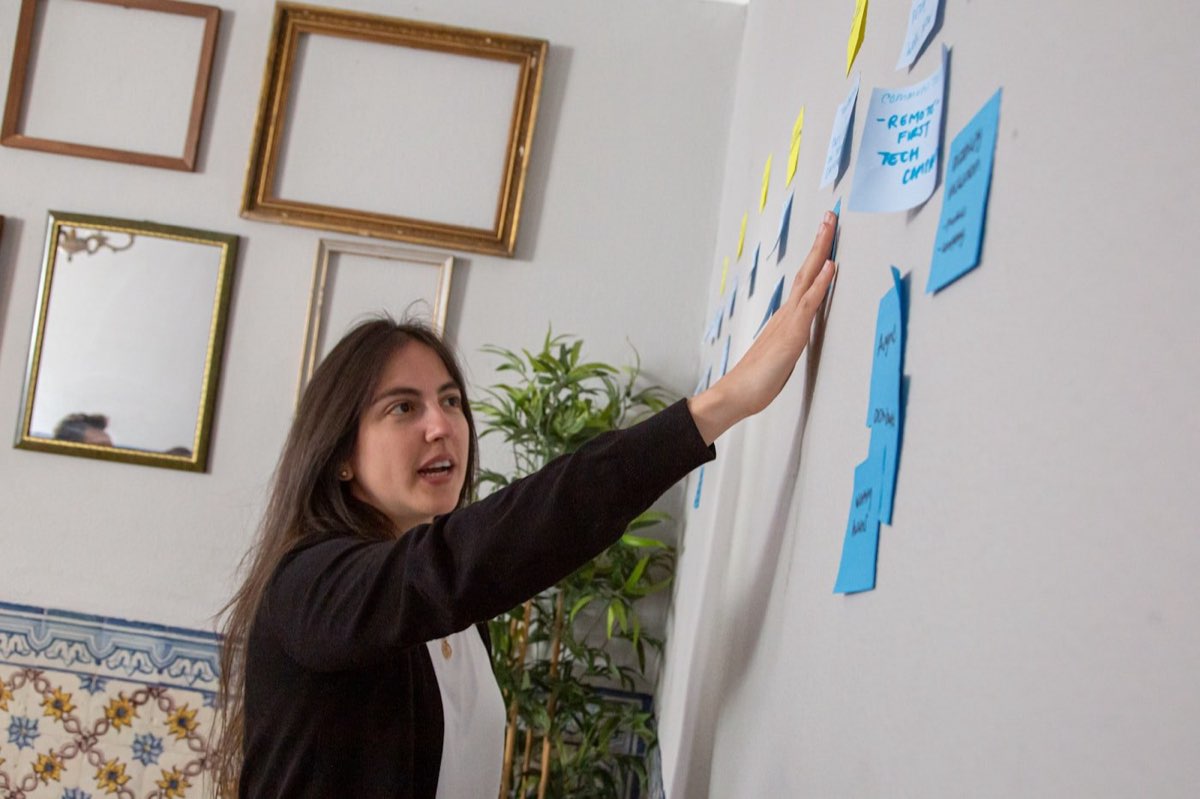
We provide agile consulting services with coaches embedded in your team's daily work, not classroom trainers, so your flow metrics improve because your daily habits actually change.
Enterprise Agile coaching helps delivery teams move beyond process compliance and build lasting Agile ways of working by coaching in flow against measurable outcomes rather than relying on classroom training and velocity charts. It covers team diagnostic, flow metric instrumentation, ceremony refinement, product discovery cadence, and the embedding of an internal coach who carries the practice after the engagement ends. Rockmere’s enterprise Agile coaching practice is staffed entirely by Scrum Alliance CEC, CTC, and CSP coaches Authorized Instructors, and senior practitioners with ten-plus years of delivery experience each. No junior pyramid. No two-week-trained coach with a fresh badge.
An Agile coach diagnoses where delivery flow stalls until the new ways of working become routine. This differs from a Scrum Master, who runs one team’s ceremonies day to day. The coach also works beyond the team, working the work intake, the product layer, and team design that a Scrum Master usually cannot influence.
The teams who hire us have usually “done Agile” and still are not releasing. They have Scrum on paper. Velocity does not translate to throughput. Sprint planning is busywork. Retros produce action items that never close. The diagnosis is rarely framework selection. It is the binding constraint between work intake and team capacity, and that is what we coach against.
A two-day Scrum training has never made a team agile. We coach in flow. In the standup. In planning. In refinement. In the retro. Until the new pattern is muscle memory and the coach is no longer needed for the team to operate.
Every engagement opens with a two-week team diagnostic. The coach sits in standups, planning, refinement, and retros. We review the team’s flow metrics. We talk to the Product Owner, the engineering manager, and three engineers selected at random. We produce a single-page diagnostic that says exactly this: here is the binding constraint, here is what we will coach, here is what good looks like in a defined window. The diagnostic is the contract.
Then we coach in flow. The coach works alongside the team during its ceremonies for the first month. Observing first. Intervening rarely. We refine the working agreements. We tune the Definition of Ready and the Definition of Done. We redesign sprint planning if it is broken. We introduce flow metrics the team actually checks. The coach becomes part of the team’s day-to-day way of working. A typical moment: a Tuesday standup in week three when the team self-corrects on a stale work item before the coach has to say anything. That is the goal.
By month two the team is running its own ceremonies with fewer interventions. We are working with the Product Owner on slice size, hypothesis framing, and discovery cadence. By month three we are with the manager on team design and how work enters the team. By month four the coach is at one day a week. By month six, an internal coach is confidently leading the team.

Velocity is a planning aid, not a goal. We instrument flow metrics from week one: cycle time, throughput, work item age, flow efficiency, and the WIP-to-throughput ratio. These are the metrics that tell you whether the work is actually getting done, not whether the team is filling sprint commitments. Cycle time falls 40 to 60 percent in the first quarter on most engagements. Throughput roughly doubles by quarter two. Retro action item close-rate climbs past 85 percent because the team can see the impact of the changes.
The flow metric dashboard runs in whatever tools you already use, Jira, Azure DevOps, Rally, Linear. We do not push a tool change unless the tool is genuinely getting in the way of delivery, which is rarer than the vendor brochures claim. The dashboard configuration is part of the deliverables, and the team owns it from week four.
The team’s process is rarely the bottleneck. The bottleneck is usually how work enters the team. Discovery quality. Slice size. Dependency clarity. Hypothesis framing. We coach those capabilities too. The Product Owner gets coached on continuous discovery, dual-track agile, and the difference between a roadmap and a hypothesis register. Engineers get coached on slice size and right-sizing user stories. The manager gets coached on team design through a Team Topologies lens and on the upstream work intake that decides what makes the backlog in the first place.
This is where Agile coaching meets product management. The practice often pairs with engagements at SaaS technology and Financial services clients where the dysfunction is not delivery scaling but feature ROI. The engineers are agile. The features are not moving the business metrics. The coach has to operate at the product layer to deliver the outcome.

Strong team-level agility is a prerequisite for SAFe to succeed. ARTs launched on top of teams that have not internalized Scrum or Kanban produce a coordination layer over chaos and the PI Objective achievement craters by PI 3. Where the engagement is sequenced, we often deliver Agile Consulting before standing up Agile Release Trains under SAFe® Consulting. The Agile coach hands off to the RTE; the team flow metrics roll up to the ART predictability measure; the PI Planning event has teams that can plan against capacity rather than commitment.
The reverse also happens. Where a SAFe® rollout has stalled at the team layer (the ART is launched but the teams are not flowing), we embed Agile coaches within the ARTs to address the team-level binding constraint before the next PI.
No certification is legally required to coach Agile, but in a crowded market it is the fastest signal of real depth. Every Rockmere engagement is staffed by coaches holding Scrum Alliance CEC, CTC, or CSP credentials Authorized Instructor status, or PMI Disciplined Agile credentials. Each coach has run team-level Agile inside enterprise contexts for at least a decade. They have been Product Owners. They have been Scrum Masters. They have been engineering managers. They’ve delivered real products for real customers.
This staffing model is the difference between an Agile coach who can challenge executive thinking on team design and one who runs ceremonies. The senior coaches are named in the SOW. Quarterly we re-verify credentials and post the active list on our credentials wall. The same model carries through our Talent Solutions practice for clients who want a coach embedded for six months or longer.
We coach teams whose work is knowledge work released as software. That is where Agile pays off the most. The patterns transfer cleanly to data teams, design ops, and ML engineering. We have coached all three.
We are not the firm to call for operational teams whose work is highly repetitive and known. Lean is the right answer there. We are not the firm for marketing or sales teams trying to adopt Scrum; the work shape does not fit, and we will say so.
We’ve seen the same pattern across multiple engagements. A scale-up software team running Scrum on paper, cycle time of 18 days, retro action items closing at 40 percent. Twelve weeks later cycle time is 7 days, action items close at 88 percent, and the Product Owner is running discovery cycles ahead of refinement instead of writing stories two days before sprint planning. The metrics tell part of the story; the deeper change is the team’s relationship to its own work.
A fintech engineering org with eight teams in a deteriorating Scrum implementation. Two of the eight teams were the bottleneck; the diagnostic identified work intake from a shared product manager as the binding constraint. The coaching focus shifted to the product layer in week three. Within a quarter cycle time across all eight teams was within agreed targets and the product manager was running a single discovery backlog across the squad cluster instead of separate per-team roadmaps.
These engagements rarely produce a single case study deliverable because the work is in the team’s daily operations rather than in a standalone deliverable. The visible evidence is the flow metric dashboard, the retro action item close-rate, and the cadence of releases. The bigger change is harder to measure the absence of the patterns that drove the engagement in the first place.
We will not run a two-day workshop and call it a transformation. Teams that “got trained” without coaching in flow regress within a sprint. We will not embed a junior coach. We will not coach a team whose manager is unwilling to look at the upstream work intake. The intake is usually the binding constraint, and a coach who only works at the team level is going to fail the engagement.
If your teams run Scrum on paper but throughput has stalled, talk to an Agile coach. We start with a two-week diagnostic and tell you the binding constraint before you commit to a full engagement.
Bring a use case. Get your 90-day plan.
Talk to an Agile Coach